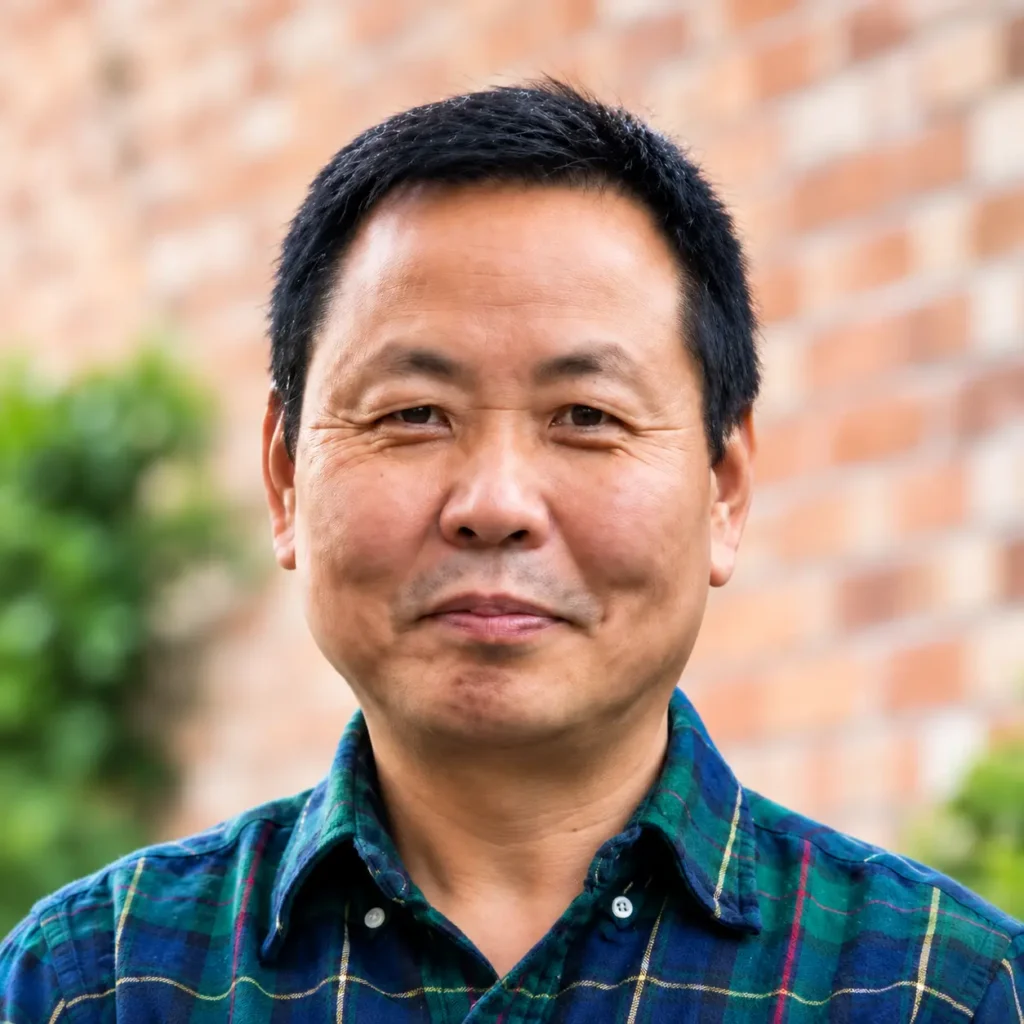
Dr. Xicai (Alex) Yue

Senior Lecturer, Bio-Instrumentation at School of Engineering

Dr. Xicai (Alex) Yue is a Senior Lecturer working in bio-instrumentation and sensor interfacing at the University of the West of England, Bristol, U.K. At the Aperture Ventures Summit, he presented “Design of Energy-Efficient Internet of Things (IoT) Nodes for Sustainable Operation,” examining approaches to long-term autonomous IoT operation through low-power sensing, passive communication, energy harvesting, storage, power management, and energy-efficient edge computing.

About the Speaker

Dr. Xicai (Alex) Yue and His Engineering Research Background

Dr. Xicai (Alex) Yue is a Senior Lecturer in bio-instrumentation and sensor interfacing with the University of the West of England in Bristol, U.K. His academic background includes a B.Eng. degree in telecommunication engineering and M.Eng. and Ph.D. degrees in biomedical engineering from Xi’an Jiaotong University in Xi’an, China.

According to his supplied biography, Dr. Yue worked as a University Teaching Assistant and subsequently as a Lecturer in China after graduation. Between 1999 and 2016, his professional experience included work with Tsinghua University in Beijing, Imperial College London in the U.K., and Sharp Laboratories of Europe in Oxford.

His presentation also describes research and engineering experience spanning low-power ASIC design and instrumentation development. In the closing part of the session, he discussed previous work involving instrumentation for stem cell culture and recording for traumatic brain injury recovery-process evaluation, alongside earlier work in electrical impedance tomography.

Dr. Yue’s supplied biography states that he has published peer-reviewed journal papers and patents and authored the book Internet of Things: An Engineering Approach, published by Elsevier. He has also served as an associate editor of Elsevier’s Measurement journal since 2018 and on the topical advisory panel of Electronics Journal since 2021. The biography further records his receipt of the Live Demo Special Session Award at the IEEE International Symposium on Circuits and Systems in 2007 and his involvement in chairing or co-chairing IEEE conference sessions since 2023.

His Aperture Ventures Summit presentation focuses on a related engineering challenge: how IoT nodes can operate for long periods despite limited available energy. Rather than treating battery replacement as the primary solution, the presentation examines the combination of low-power sensing and communication, energy harvesting and storage, power management, and energy-efficient computing as components of a self-sustainable IoT architecture.

Featured Summit Presentation

Design of Energy-Efficient Internet of Things (IoT) Nodes for Sustainable Operation

The presentation addresses one of the central practical challenges of large-scale IoT deployment: how to power distributed IoT nodes for long-term operation.

Dr. Yue explains that IoT nodes commonly depend on small batteries even though electronic components can have substantially longer lifetimes. Frequent battery replacement becomes increasingly difficult and costly as the number of deployed IoT nodes grows, while also creating environmental concerns.

The presentation proposes a self-sustainable IoT node as an autonomous sensing and computing system designed for long-term operation using harvested or wirelessly transferred energy while meeting sensing, communication, and computational requirements without frequent battery replacement.

Two broad strategies are emphasized. The first is to reduce the energy required by the node through approaches such as passive sensing, passive communication, low-power application-specific integrated circuits, and energy-efficient edge computing. The second involves using AI to optimize energy harvesting and wireless power transfer.

The presentation subsequently examines passive RFID-style communication, surface acoustic wave devices, passive biosensing, self-powered sensors, low-power analog and digital circuits, energy storage, charge estimation, maximum power point tracking, power budgeting, and AI-oriented low-power computing approaches.

The overall framework combines low-power sensing and communication, integrated circuits, edge computing, energy harvesting, storage, and energy management to support long-term autonomous IoT operation.

Key Takeaways

1. Battery replacement is a scalability challenge for IoT Large-scale IoT deployments can contain very large numbers of nodes, making frequent battery replacement an economic, maintenance, downtime, and environmental concern.

2. Energy availability must influence IoT node design When harvested or wirelessly transferred energy is limited, reducing the node's energy consumption becomes essential to achieving autonomous operation.

3. Passive sensing and communication can reduce power requirements The presentation examines passive communication and passive sensing approaches, including RFID-based concepts and surface acoustic wave devices, where sensing can be performed without a conventional local power supply.

4. Extremely low-power applications may require specialized circuits Dr. Yue discusses low-power ASIC techniques, including subthreshold operation, current-reuse amplifiers, and low-power ADC design, as approaches for reducing power consumption in data acquisition systems.

5. Energy storage is an important part of harvested-energy systems Because environmental energy harvesting is variable, storage can act as a buffer between available harvested energy and the IoT node's power requirements. The presentation discusses batteries, thin-film batteries, and supercapacitors.

6. Accurate energy and charge estimation supports power budgeting The presentation emphasizes knowing how much energy is harvested and stored so that system designers can determine requirements such as photovoltaic panel size, illumination conditions, and measurement intervals.

7. Edge computing must also be designed around energy constraints The presentation examines approaches including non-volatile memory, approximate computing, and neuromorphic approaches for reducing the energy demands of computation at the IoT node.

8. Sustainable IoT requires system-level optimization The presentation concludes with a unified node-level framework connecting low-power sensing and communication, integrated circuits, edge computing, harvesting, storage, and management, with the objective of moving toward self-optimizing and sustainable IoT systems.

Topics & Technologies Discussed

Energy-Efficient IoT Design approaches for reducing the energy requirements of IoT nodes and enabling longer autonomous operation.

Self-Sustainable IoT Nodes Autonomous sensing and computing nodes intended to operate through harvested or wirelessly transferred energy without frequent battery replacement.

Passive Communication The presentation discusses passive communication beginning with RFID concepts and extending the discussion to approaches such as backscatter-based communication.

Passive Sensing Passive sensing approaches discussed include surface acoustic wave devices and capacitive sensing.

Surface Acoustic Wave Devices Surface acoustic wave devices are presented as a means of enabling passive sensing and communication, including examples involving tire-pressure measurement and other sensing applications.

Self-Powered Sensors The presentation examines self-powered sensing using devices such as triboelectric nanogenerators and considers their use in sensing applications such as step counting.

Low-Power ASIC Design The presentation covers application-specific integrated circuit techniques for reducing power consumption, including subthreshold operation and current-reuse amplifier architectures. 

Low-Power ADCs Analog-to-digital conversion is identified as a significant contributor to data-acquisition power consumption, with the presentation discussing low-power successive-approximation ADC approaches.

Energy Harvesting The presentation examines harvesting weak energy from the environment and the challenges created by variable energy availability.

Energy Storage and Supercapacitors Batteries, thin-film batteries, and supercapacitors are discussed as storage technologies, including differences in charging-cycle characteristics and self-discharge.

Power Management and MPPT Power-management approaches include impedance matching, maximum power point tracking, voltage boosting, and direct current charging approaches.

Energy-Efficient Edge Computing The presentation discusses non-volatile memory, approximate computing, neuromorphic computing, and approaches that combine memory and computation to reduce the energy required for AI-oriented processing.

Industries Served

The supplied material does not identify a formal list of industries that Dr. Yue serves. The following domains are therefore presented only as application areas explicitly discussed or illustrated in the presentation, rather than as claims of commercial industry service.

Internet of Things IoT is the central technology domain of the presentation, with the discussion focused on powering and operating autonomous IoT nodes.

Healthcare and Medical Devices The presentation discusses bioinstrumentation, biosensors, pacemakers, EEG amplifiers, and instrumentation for biomedical applications.

Automotive Automotive sensing is represented by the discussion of passive tire-pressure measurement using surface acoustic wave technology.

Smart Environment and Building Applications The presentation describes a self-sustainable IoT node for smart-building air recognition and reports a 2.5-minute measurement period for CO₂ measurement in that example.

Assistive Human-Computer Interaction The presentation discusses a passive human-computer interface concept involving eye-blink detection and interaction for disabled users.

Industry Applications

Passive Tire-Pressure Measurement

The presentation describes surface acoustic wave technology for passive wireless tire-pressure measurement. The example illustrates how passive sensing can provide measurement functionality without relying on a conventional local power source.

Passive Biosensing

Dr. Yue discusses biosensors based on substrates coated with biomaterials that can capture targets such as viruses or proteins. The presentation describes a surface acoustic wave approach in which impedance changes can produce a frequency shift in the reflected RF signal.

Passive Eye-Blink and Human-Computer Interaction

A passive human-computer interface is presented for assistive interaction. The approach uses capacitive sensing integrated with a surface acoustic wave device to detect eye opening and closing, enabling real-time eye-blink detection without a conventional power supply at the sensing interface.

Self-Powered Step Counting

The presentation examines the use of self-powered sensing based on triboelectric nanogenerator principles for step counting. The discussion focuses on developing appropriate sensor-interface circuitry for the generated signal.

Self-Sustainable Environmental Sensing

A self-sustainable IoT node for smart-building air recognition is described, with the presentation reporting a 2.5-minute measurement period for CO₂ measurement in the demonstrated example.

Low-Power Biomedical Instrumentation

The presentation uses biomedical instrumentation examples, including EEG amplifier design and pacemaker-related power considerations, to illustrate why reducing circuit-level power consumption can matter in implanted or energy-constrained systems.

Frequently Asked Questions

What was Dr. Xicai (Alex) Yue's presentation at the Aperture Ventures Summit?

Dr. Yue presented “Design of Energy-Efficient Internet of Things (IoT) Nodes for Sustainable Operation,” focusing on technologies and system approaches for long-term autonomous IoT operation.

In the presentation, a self-sustainable IoT node is described as an autonomous sensing and computing system designed for long-term operation using harvested or wirelessly transferred energy while meeting sensing, communication, and computational requirements without frequent battery replacement.

IoT electronics can have operating lifetimes longer than their batteries. At large deployment scales, frequent battery replacement can create economic, maintenance, downtime, and environmental challenges.

The presentation discusses passive sensing, passive communication, low-power ASICs, energy-efficient data acquisition, energy-efficient edge computing, non-volatile memory, approximate computing, and neuromorphic approaches.

Passive sensing is an approach discussed in the presentation in which sensing can be performed without a conventional local power supply. Examples include surface acoustic wave devices and capacitive sensing techniques.

Energy harvesting can provide power from environmental sources, but the available power is variable and limited. The presentation therefore combines harvesting with storage, power management, and low-power node design.

Environmental energy is not necessarily available at a constant level. Storage provides a pool that can help balance variable harvested energy with the IoT node’s power requirements.

The presentation discusses lithium batteries, thin-film batteries, and supercapacitors. It compares characteristics including charging cycles and self-discharge.

Power budgeting involves comparing the charge or energy available to the node with the amount consumed by its sensing, processing, and other operations. The presentation uses this approach to discuss requirements such as photovoltaic panel sizing and minimum measurement periods.

Computing can represent a significant power requirement in IoT nodes. The presentation therefore discusses energy-efficient approaches including non-volatile memory, approximate computing, neuromorphic architectures, and combining memory with computation.

The presentation concludes with a unified node-level framework connecting low-power sensing and communication, integrated circuits, edge computing, energy harvesting, storage, and energy management to support long-term autonomous operation.

Explore More from Aperture Ventures Summit

Explore additional presentations and expert discussions from the Aperture Ventures Summit.