📩 Aperture@thegaogroup.com
Due to our team’s recent breakthroughs in physical AI and AIoT, this website and the websites of all 64 portfolio companies are being substantially upgraded to incorporate our Physical AI and AIoT engines and sensing technologies. This overhaul will be completed by Oct. 31, 2026.
This page and all other pages on Physical AI and AIoT engines on this website have been updated.
Physical AI and AIoT Engines Architecture
An architecture connecting the physical world to data and AI—and AI back to the physical world.
Aperture AIoT Engine and Aperture Physical AI Engine
From Physical-World Data to AI Decisions and Controlled Action
Aperture portfolio companies are designed around a shared four-engine capability architecture. The first three engines—Identification, Sensing and AI Decision—form the Aperture AIoT Engine. Adding the Physical AI Action Engine forms the Aperture Physical AI Engine.
In this architecture, “Engine” is an architectural and branding term for a functional capability layer. An engine can combine multiple hardware and software components with data, AI, integrations and operational workflows to perform a defined role.
The Architecture
Identification
What / who / where?
Sensing
What is happening?
AI Decision
What does it mean, what may happen next, and what should be done?
Physical AI Action
How should an authorized decision be executed in the physical world?
Verification and improvement are feedback functions across the four engines. New measurements and status information establish what changed and whether the intended result was achieved.
Identify → Sense → Decide → Act. Verify the result and feed the updated state back into the architecture. Improvements may involve reviewed changes to models, rules or workflows; automatic self-learning is not required.
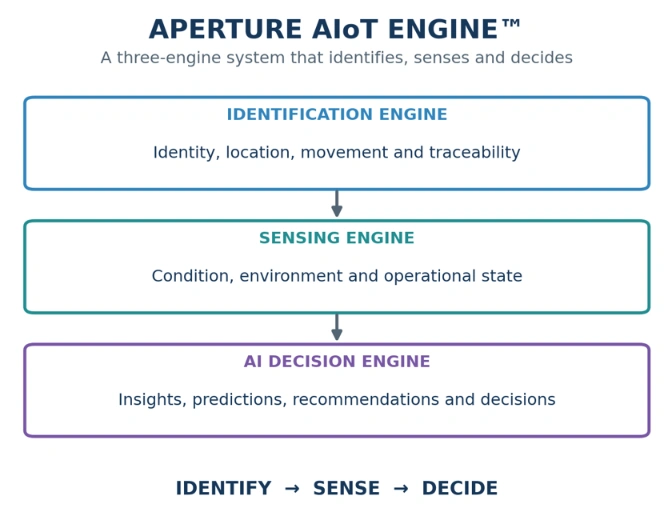
Figure 1. Aperture AIoT Engine™: three complementary engines connect physical-world data to AI-supported decisions.
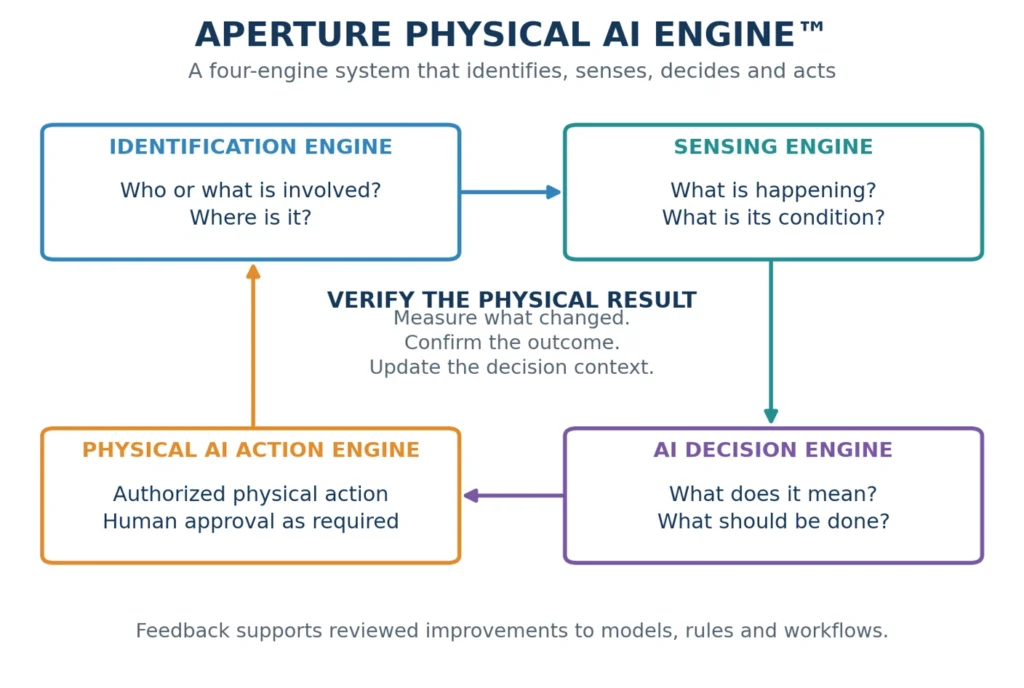
Figure 2. Aperture Physical AI Engine: four engines connected through physical execution and verification feedback.
Operational Support and Physical Execution
Alerts, recommendations, work orders and human coordination support operations and can form a pathway toward Physical AI. The physical execution capability connects AI-supported decisions to equipment or robotic actions and verifies the resulting physical state. Human approval can remain part of this loop.
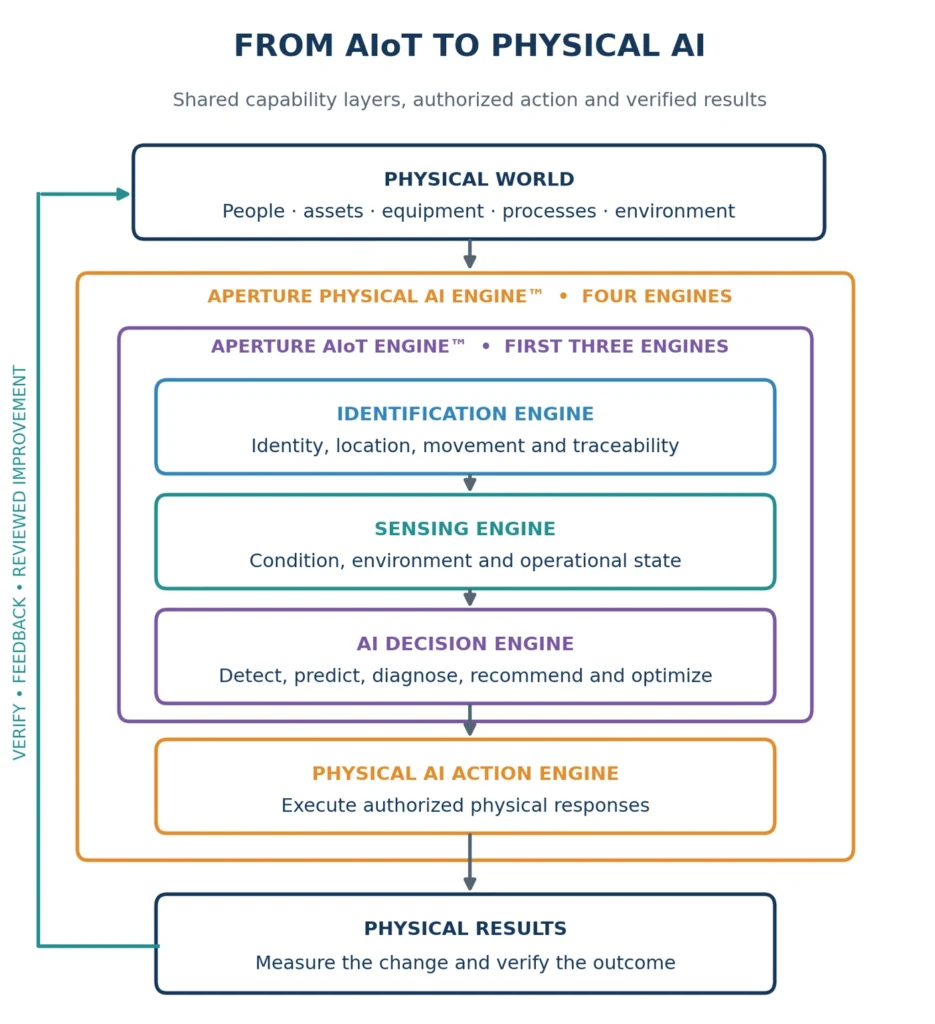
Figure 3. Shared architecture: the first three engines form the Aperture AIoT Engine; the action layer extends it to the Aperture Physical AI Engine. Physical results return as verification feedback.
Why the Shared Architecture Matters
- Reusable technical modules, integration patterns, software components and operating knowledge across portfolio companies.
- Industry-specific configuration for different assets, measurements, risks, workflows, regulations and action boundaries.
- Technology-neutral implementation: RFID, BLE, UWB, GPS, sensors, vision, PLCs, SCADA, edge computing, AI, robotics and other technologies can serve as components.
- Phased deployment so customers can begin with a focused, lower-risk use case and expand as data quality, integration, value and technical readiness are demonstrated.
Technical Foundation and Positioning
Reliable AI begins with reliable physical-world data. Identification establishes trusted identity, location, movement and traceability. Sensing establishes condition, environment, performance and operational state. AI interprets this context using industry-specific models, enterprise information and operational constraints. The action layer connects authorized decisions to people, workflows, equipment and robotic or autonomous systems.
Human Authority, Safety and Governance
Not every AI-supported decision should trigger automatic action. Depending on consequence, confidence, regulation and customer policy, the architecture can range from human-executed recommendations to human-approved actions and carefully bounded automation.
- Identity and authorization controls
- Defined operating limits and command validation
- Audit trails and traceability
- Cybersecurity protections
- Human override and escalation
- Interlocks, fail-safe/fallback behavior and system monitoring
Frequently Asked Questions
What are AIoT and Physical AI Engines?
In this architecture, an Engine is a functional capability layer that can combine multiple hardware and software components, data, AI, integrations and operational workflows to perform a defined role. Aperture uses four: Identification, Sensing, AI Decision and Physical AI Action.
How do the four Engines work together?
The sequence is Identify, Sense, Decide and Act. Identification establishes identity, location and movement; Sensing captures condition and operational state; the AI Decision Engine interprets the combined context; and the Physical AI Action Engine executes authorized responses. Verification returns the resulting state as feedback across the architecture.
Can the architecture be deployed incrementally?
Yes. Deployment can begin with a focused identification or sensing use case, add AI-supported detection and recommendations, then connect decisions to alerts and digital workflows. Human-approved equipment or robotic actions follow, and bounded automation is introduced only after validation and governance are established.
Next Steps
Explore the Identification, Sensing, AI Decision and Physical AI Action Engine pages for technical detail, return to overview and applications of Physical AI and AIoT Engines for industry examples, or explore Physical AI & AIoT Companies to find an industry focus relevant to your application, and your industry.