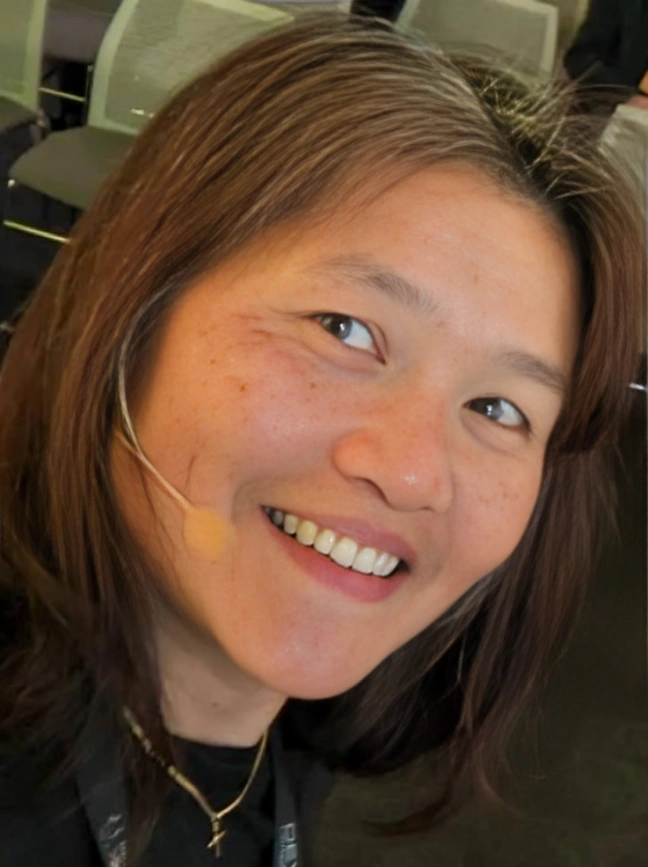
Mary Grygleski

Global VP for Western Hemisphere

The AI Collective


Mary Grygleski is Global VP for the Western Hemisphere at The AI Collective and a technology leader focused on software architecture, distributed systems, and artificial intelligence. At the Aperture Ventures Summit, she explored how event-driven architectures and multi-agent systems can support complex generative AI workflows through real-time processing, distributed coordination, adaptive decision-making, and scalable enterprise architecture.

About the Speaker

Mary Grygleski serves as Global VP for the Western Hemisphere at The AI Collective, covering North America, Mexico, Central America, and South America. During her summit presentation, she also explained that she works with AI Collective chapters internationally and leads its Chicago chapter.

The summit introduction describes Grygleski as a technology leader and software architect with expertise in cloud-native applications, event-driven architectures, distributed systems, artificial intelligence, and enterprise-scale technologies. Her work has focused on scalable and resilient software systems designed for complex business environments.

Grygleski stated during the presentation that she brings more than 25 years of software engineering experience, primarily in Java, with later work extending into AI, cloud computing, DevOps, and broader software development. She also described her transition into developer advocacy, where education, technology communication, and bridging technical and business perspectives became important parts of her work.

At the time of the presentation, Grygleski also said that she had recently joined the advisory team of Lume, an enterprise AI agents startup, in a role focused on AI evangelism, architecture, enterprise AI, and market expansion. She identified distributed systems as a longstanding area of interest and explained that one objective of her work is to bridge technology with practical business considerations.

Her Aperture Ventures Summit session reflects that combination of technical architecture and business context, examining how AI agents, event-driven systems, distributed computing, messaging, state management, orchestration, and human oversight can contribute to more capable enterprise generative AI workflows.

Featured Summit Presentation

Harnessing Event-Driven and Multi-Agent Architectures for Complex Workflows in Generative AI System

Generative AI systems can become difficult to manage when workflows extend beyond a single model or prompt and begin interacting with multiple applications, data sources, decisions, transactions, and external systems. Mary Grygleski’s presentation examines how event-driven architectures and multi-agent systems can help structure these more complex environments.

The session moves from the fundamentals of AI agents into agentic architecture, multi-agent collaboration, orchestration patterns, event-driven computing, distributed systems, and enterprise-scale workflow design. Grygleski explains that agents can extend the capabilities of large language models through tools, external information, memory, planning, and task coordination. She also emphasizes that complex enterprise scenarios may require multiple specialized agents rather than a single autonomous component.

Event-driven architecture provides another layer by enabling asynchronous communication and real-time responses between components. The presentation describes how events can coordinate agent activity, trigger downstream work, and support multi-step AI workflows. It also addresses the engineering trade-offs involved, including state management, observability, distributed-system reliability, scalability, transaction handling, and human involvement.

Key Takeaways

AI agents extend rather than replace the core capabilities of LLMs.
Grygleski describes agents as a way to add tools, current information, planning, memory, task decomposition, and interaction with external systems.

Complex enterprise workflows may require specialized collaborating agents.
Different agents can handle distinct responsibilities such as security, inventory, payments, shipping, user interactions, or interaction with different AI models.

Start with the simplest architecture that works.
During the Q&A, Grygleski specifically advised beginning with a single agent and proof of concept rather than automatically choosing a multi-agent system.

Event-driven systems enable real-time and asynchronous processing.
Event streams allow components to respond without requiring tightly coupled, synchronous interactions.

Loose coupling can improve scalability but increases operational complexity. Messaging and event-driven designs can scale effectively, but tracking, synchronization, debugging, logging, and tracing become more important.

State and memory are essential for serious enterprise AI workflows.
Grygleski highlights context preservation, stateful workflows, and long-running transactions as key requirements beyond basic prompt-response interactions.

Human involvement remains important.
The presentation does not describe today's multi-agent systems as fully autonomous; Grygleski emphasizes that real systems still require substantial human-in-the-loop involvement.

Enterprise AI architecture must account for scale, coordination, accountability, and consistency.
Grygleski connects event-aware, agent-coordinated architecture with workflows spanning customer interactions, operations, data, finance, service, compliance, and other business functions.

Topics & Technologies Discussed

1. AI AgentsThe presentation defines agents as systems that receive goals, determine actions, maintain relevant context, plan work, and take actions toward defined outcomes.

2. Multi-Agent SystemsMultiple specialized agents can collaborate on complex tasks, with different agents handling distinct capabilities, systems, or stages of a workflow.

3. Agent OrchestrationGrygleski discusses orchestration patterns for coordinating agents, including orchestrator-worker, hierarchical, blackboard, and market-based approaches.

4. Agentic Design PatternsThe session discusses four agentic patterns: reflection, tool use, planning, and multi-agent collaboration.

5. Event-Driven ArchitectureEvents can signal that something has happened and trigger the appropriate agent or process without requiring tightly coupled components.

6. Publish-Subscribe and Message QueuesThe presentation explains publish-subscribe messaging, brokers, and queues as mechanisms for asynchronous communication and scalable event processing.

7. Event SourcingEvent sourcing is discussed as a way to preserve changes in system state so developers and operators can trace what happened during a workflow or transaction.

8. Model Context Protocol — MCPGrygleski discusses MCP as an interface approach for connecting LLM-related systems with tools, APIs, enterprise applications, databases, and other resources.

9. Agent-to-Agent — A2AThe session also covers agent-to-agent communication, describing A2A as complementary to lower-level resource and tool integration.

10. Distributed ComputingDistributed-system considerations include consistency, availability, partition tolerance, latency, state management, resiliency, and recoverability.

11. Observability, Logging, and TracingEvent-driven and distributed AI workflows require stronger monitoring because asynchronous messages and distributed activity can make failures more difficult to trace.

12. Multi-Agent Development FrameworksThe transcript references technologies and frameworks including AutoGen, CrewAI, LangGraph, AWS Strands, Quarkus with LangChain4j, and Vertex AI agent tooling.

Industries Served

The following industries and operating environments were explicitly discussed or used as practical examples in the presentation. They should not be interpreted as an exhaustive list of Mary Grygleski's client industries.

Enterprise Technology and Software The presentation is primarily focused on enterprise-scale applications, distributed software systems, generative AI, agent orchestration, and complex business workflows.

Retail, E-Commerce, and Supply Chain Order entry, inventory, suppliers, payments, shipping, recommendation systems, and external service interactions are used repeatedly as examples of workflows that can require multi-agent coordination.

Financial Services and Trading Grygleski uses trading and transaction processing to illustrate why event history, state consistency, auditing, and traceability are important in distributed systems.

Travel and Booking Airline and travel booking are discussed as examples of workflows involving multiple steps and external systems.

Legal Near the close of the presentation, Grygleski identifies legal services as a target vertical for enterprise AI-agent work associated with Lume.

Healthcare Healthcare is also explicitly identified as a target vertical for enterprise AI-agent applications.

Industry Applications

Example Applications Discussed

Enterprise Order and E-Commerce Workflow Orchestration

A multi-agent architecture can divide activities such as order intake, inventory checks, supplier interaction, payment processing, and shipping coordination across specialized agents.

Real-Time Cross-Functional Business Workflows

Event-aware systems can use real-time triggers across functions such as sales, service, finance, and operations, while agents coordinate actions according to business objectives.

Financial Transaction Tracking and Auditability

Event sourcing can preserve changes in transaction state, enabling teams to trace what occurred at specific stages when investigating a transaction or workflow.

Long-Running Enterprise Transactions

The presentation identifies transactions that may remain active for extended periods as an architectural challenge requiring state management and appropriate workflow infrastructure.

Real-Time Agent Coordination

A user request, assigned subtask, generated model output, or completed result can function as an event that activates the next agent or stage of a workflow.

Multi-Model Generative AI Workflows

Different agents can interact with different models or capabilities, allowing a workflow to divide responsibilities rather than expecting a single model or agent to perform every function.

Frequently Asked Questions

Who is Mary Grygleski?

Mary Grygleski is Global VP for the Western Hemisphere at The AI Collective. The summit transcript also describes her work in software architecture, distributed systems, cloud-native technologies, artificial intelligence, and enterprise technology.

Her presentation was titled “Harnessing Event-Driven and Multi-Agent Architectures for Complex Workflows in Generative AI System.”

An AI agent is described as a system that receives a goal, determines what should happen next, maintains relevant context, plans tasks, and takes actions toward completing the objective.

Multiple agents can be useful when a workflow becomes sufficiently complex to require separate responsibilities, external systems, tools, models, or business processes. Grygleski recommends beginning with a single agent when possible and expanding only when the workflow requires it.

In the presentation, event-driven architecture is an approach in which events signal that something has happened and trigger other components or agents to respond. It supports asynchronous and real-time processing rather than requiring every component to communicate synchronously.

Events can coordinate agent activity. A user request may trigger one agent, a completed subtask may activate another, and generated results can become events that move the workflow to its next stage.

Complex workflows may span many steps or long-running transactions. Maintaining state and context allows systems to preserve relevant information across those interactions rather than treating every model call as an isolated request.

Asynchronous messages can move through multiple queues, brokers, services, and agents, making problems harder to trace. Grygleski therefore emphasizes logging, tracing, monitoring, auditing, and broader observability.

Yes. Real-time alerting and situational awareness are central themes of the IPAS architecture.

No. In the presentation, she describes current multi-agent collaboration as an area still undergoing research and emphasizes that real-world systems continue to involve substantial human participation.

Grygleski describes APIs as exposing trusted business capabilities and data, events as signals describing what has happened, and agents as components that reason over context, coordinate actions, and adapt workflows to business goals.

The presentation emphasizes starting with a clear use case and considering architecture complexity, scalability, state management, observability, distributed-system reliability, transaction handling, security, authorization, and whether multiple agents are actually necessary.

Explore More from Aperture Ventures Summit

Explore additional presentations and expert discussions from the Aperture Ventures Summit.