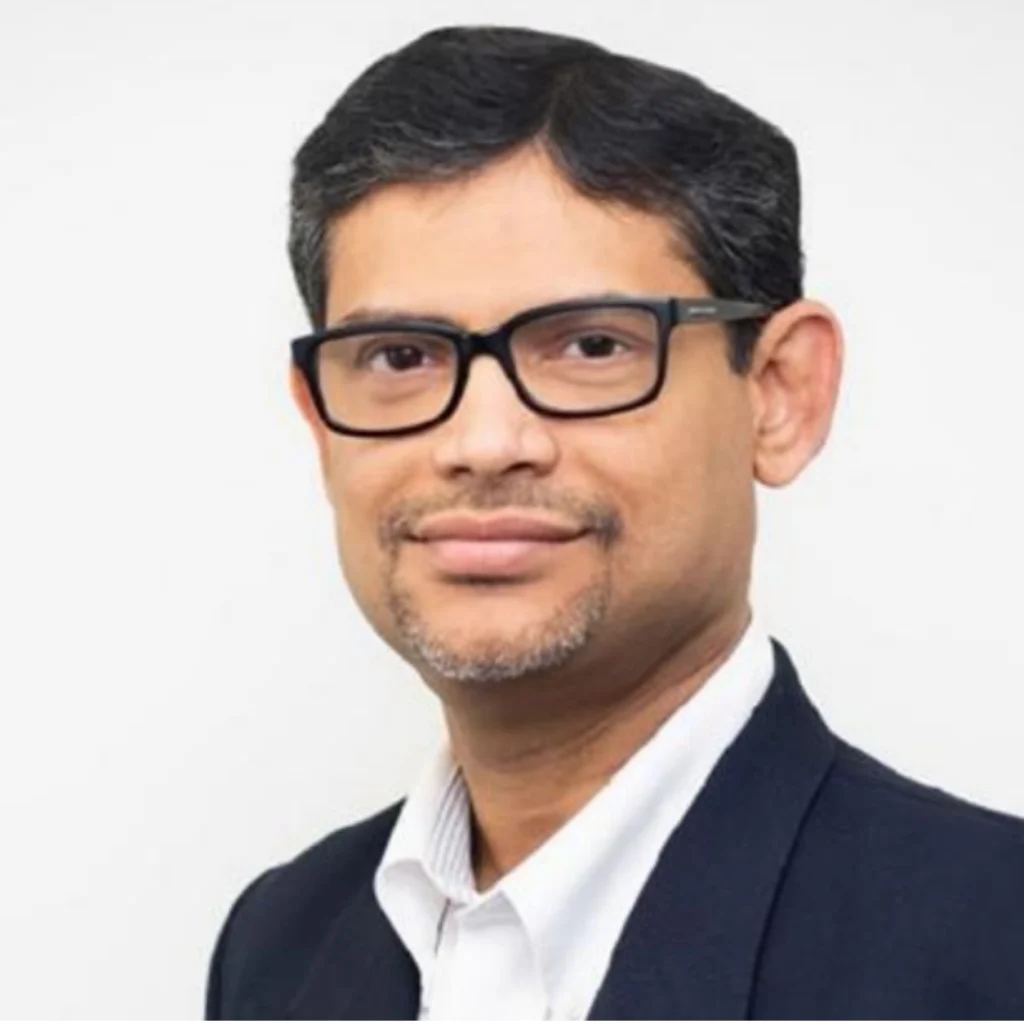
Joseph Ancil and Sas Mukherjee

Co-Presenters at the Aperture Ventures Summit

Joseph Ancil, Chief AI Officer at healthplans.ai, and Sas Mukherjee, President at Catalyst Solutions, are co-presenters featured in a joint Aperture Ventures Summit session focused on practical applications of artificial intelligence in health insurance.

Their shared presentation, “Real World AI Solutions for the C-Suite: A Financial Lifeline for Medicaid Health Plans,” examines how organizations can move beyond isolated AI experiments and connect AI initiatives with enterprise strategy, governance, operational processes, measurable benefits, and return on investment.

The session draws on healthcare and health insurance experience to discuss enterprise AI adoption, AI-enabled process transformation, human-in-the-loop decision-making, functional AI solutions, compliance, data, and business outcomes.

The presentation was delivered jointly by Joseph Ancil and Sas Mukherjee, with the speakers contributing perspectives from health insurance, healthcare technology, transformation, operations, finance, and AI implementation.

About the Speakers

Joseph Ancil

Joseph Ancil is Chief AI Officer at healthplans.ai. His supplied biography describes more than two decades of leadership experience in healthcare, including technology management, AI solutions deployment, business process outsourcing, sales, partner management, transformation, and global supply chain management with full P&L accountability.

At healthplans.ai, Joseph leads the firm’s AI practice, focusing on AI strategies and solutions designed for healthcare business operations and back-office processes. His work includes secure, compliant, and scalable AI solutions, including “touchless” and “human-in-the-loop” approaches applied across areas such as enrollment, claims, and finance functions.

His professional background also includes serving as Chief Procurement Officer at Gainwell Technologies, where he established strategic alliances involving Big 4 firms, BPO providers, system integrators, and PaaS/COTS partners. Earlier in his career, he headed the healthcare practice at Tech Mahindra, formerly Satyam, working across the payer, provider, and pharma areas of healthcare.

Joseph is also described as a lifelong learner who teaches online courses covering AI, data, analytics, and supply chain management and participates as a speaker and advisor to schools and technology forums in New Jersey.

Sas Mukherjee

Sas Mukherjee is President of Catalyst Solutions and has more than 25 years of leadership experience across healthcare, technology, and services. His supplied biography describes executive experience spanning roles including Board Member, CEO, and CFO across private equity-backed and publicly traded organizations.

His background includes serving as CFO at Gainwell Technologies, where he helped establish the company following a carve-out, led M&A initiatives, and delivered synergy savings. He previously served as Chief Executive of the Americas for a Blackstone portfolio BPO company and held divisional CFO and strategy responsibilities at Kaiser Permanente.

Sas also held CFO and strategy leadership positions at York Risk Services Group and Serco Global Services. Earlier in his career, he was a Managing Director at a Big 4 consulting firm, advising Fortune 500 companies on globalization, outsourcing, and technology-driven transformation.

In the presentation transcript, Sas introduced himself as CEO of Catalyst Solutions and described his career as spanning technology, services, and healthcare, including experience at Kaiser Permanente, a Blackstone portfolio BPO company, Gainwell Technologies, and Big Four consulting firms. This transcript title is retained as a presentation-context detail rather than replacing the supplied current-title information.

Featured Summit Presentation

Real World AI Solutions for the C-Suite: A Financial Lifeline for Medicaid Health Plans

Joseph Ancil and Sas Mukherjee jointly presented “Real World AI Solutions for the C-Suite: A Financial Lifeline for Medicaid Health Plans.” The session focuses on using AI as an enterprise transformation lever rather than treating it as a collection of disconnected technology experiments.

The presentation examines challenges facing health plans, including operational costs, compliance requirements, fraud, waste and abuse, changing business conditions, data challenges, and the difficulty of translating AI investments into measurable business value.

The speakers discuss a model based on business priorities, governance, domain expertise, functional process transformation, measurable outcomes, and human oversight. Examples include AI-enabled claims processing, Discovery AI for understanding processes and performance, coordinated AI agents or “ants,” enterprise integration, and human-in-the-loop decision-making.

The session also addresses organizational adoption, workforce preparation, change management, and the importance of measuring tangible benefits from AI initiatives.

Key Takeaways

1. AI should be connected to enterprise strategy rather than treated as a side project. The presentation emphasizes that AI initiatives need alignment with business priorities and governance.

2. Organizations should identify problems before selecting AI solutions. The speakers discuss the risks of adopting solutions simply because the technology exists rather than beginning with a clearly defined business problem.

3. End-to-end functional processes can be more valuable than isolated point solutions. The presentation describes coordinated AI components working together across a functional process.

4. Human oversight remains important in healthcare AI. The speakers describe keeping humans in the loop for decisions, validation, verification, explainability, and auditability.

5. Data is fundamental to AI outcomes. The presentation discusses how organizational data quality and availability affect the usefulness of AI models and the ability to identify opportunities.

6. AI initiatives need measurable benefits. The speakers repeatedly emphasize tangible benefits, metrics, savings, and ROI rather than relying on experimentation without measurable outcomes.

7. Domain expertise matters alongside AI technology. The presentation argues that technology-led solutions can fail to address real organizational problems when they lack sufficient industry and process understanding.

8. Business processes may need to be reimagined rather than simply automated. The presentation frames AI as a means of reconsidering how work is performed and how organizations can achieve different outcomes.

Topics & Technologies Discussed

1. Enterprise AI The presentation examines AI as part of enterprise strategy and governance rather than as a collection of independent projects.

2. Human-in-the-Loop AI The speakers describe human involvement in decision-making, particularly in healthcare processes where decisions can have significant consequences.

3. AI Agent The presentation uses the term “ants” for contained AI workers or agents designed to perform individual tasks. Multiple agents can then be coordinated to complete a broader functional process.

4. Enterprise Integrated AI The speakers describe connecting multiple AI components across functional processes and enterprise operations rather than maintaining isolated AI projects.

5. Discovery AI Discovery AI is described as a tool used to map processes, performance, data flows, and potential compliance gaps. The presentation identifies it as an initial way to understand an organization's current operating environment.

6. OCR Agent An OCR agent is discussed as one component in the claims-processing example, where information must be extracted from incoming documents.

7. Validation Agent A validation agent is described as checking extracted information against existing organizational data.

8. Autonomous Web Crawler An autonomous web crawler is identified as one of the agents shown in the presentation's technical architecture.

9. Integration Agent The integration agent is described as connecting different parts of the input-process-output chain.

10. Claims Processing The presentation demonstrates how AI components can be combined across claims processing, from information extraction and validation through the broader adjudication process.

11. AI Governance Governance is repeatedly identified as a critical component of enterprise AI adoption, including evaluating use cases, strategic alignment, risk, coordination, and expected benefits.

12. AI-Enabled Process Discovery and Mapping The speakers describe using AI to gather and process large amounts of operational information and organize it into actionable opportunities, including heat maps and value-oriented prioritization.

Industries Served

Individual Industry Experience

Joseph Ancil Joseph Ancil's supplied biography identifies extensive experience in the healthcare sector, including work across healthcare technology, healthcare business processes, payer, provider, and pharma environments. His presentation introduction also describes his background as a business technologist with substantial healthcare experience.

Sas Mukherjee Sas Mukherjee's supplied biography identifies leadership experience across healthcare, technology, and services. His background includes Kaiser Permanente, Gainwell Technologies, BPO services, consulting, and technology-driven transformation.

Industries Addressed in the Presentation

Healthcare and Health Insurance Healthcare and health insurance form the central industry context of the presentation. The discussion focuses particularly on health plans, healthcare operations, Medicaid, and insurance processes.

Medicaid The presentation specifically focuses on Medicaid health plans and discusses operational, financial, compliance, and AI-related challenges within that environment.

Medicare Advantage The transcript also references Catalyst Solutions' work serving Medicaid and Medicare Advantage members.

Broader Enterprise Applications During the Q&A, Sas Mukherjee explains that the principles and critical success factors discussed in the healthcare example are not presented as healthcare-specific and can be applied to other scenarios and industries.

Industry Applications

AI-Enabled Claims Processing The presentation describes an AI-enabled claims process in which individual agents handle tasks such as extracting information, validating data, and supporting the broader claims process.

Process Discovery and Operational Analysis Discovery AI is described as a way to map processes, performance, and data flows, identify process deficiencies, and highlight potential compliance gaps.

Compliance Gap Identification The presentation discusses using AI to identify process deficiencies and latent compliance gaps that may otherwise remain difficult to detect.

Enrollment and Other Functional Processes The speakers describe extending the AI approach beyond claims into functions such as enrollment and sales and marketing.

Fraud, Waste and Abuse The presentation identifies fraud, waste, and abuse as an area where health plans seek significant improvements and where AI can be explored as part of broader transformation efforts.

Workforce and Process Optimization The session discusses using AI to understand how employees perform processes, identify variations, prioritize opportunities, and help organizations determine where action can produce measurable benefits.

Frequently Asked Questions

Who are Joseph Ancil and Sas Mukherjee?

Joseph Ancil is Chief AI Officer at healthplans.ai, while Sas Mukherjee is President of Catalyst Solutions. Both have professional backgrounds spanning healthcare and technology-related transformation, with their specific experience remaining distinct.

They jointly presented “Real World AI Solutions for the C-Suite: A Financial Lifeline for Medicaid Health Plans.” The session examines practical approaches to enterprise AI adoption and measurable business outcomes in health insurance.

The presentation focused on moving AI from isolated projects toward enterprise-level transformation connected to business strategy, governance, measurable benefits, process redesign, and ROI.

The human-in-the-loop approach keeps people involved in important decisions and validation processes. In the healthcare examples discussed, humans remain involved in decisions such as reviewing information and determining whether a claim should be approved or denied.

“Ants” are the term used in the presentation for contained AI workers or agents designed to perform individual tasks. Multiple ants can be coordinated to perform a broader functional process

Discovery AI is described as a tool that can map processes, performance, and data flows and help identify areas such as process deficiencies and potential compliance gaps. The presentation discusses it as a way to understand the current state before determining where AI can create value.

The speakers describe governance as necessary to align AI initiatives with enterprise strategy, prevent disconnected projects from working at cross-purposes, evaluate use cases, and ensure that AI investments are connected to measurable business benefits.

The presentation argues that technology alone does not necessarily solve the right business problem. Understanding the relevant industry, business processes, and operational context can help organizations identify meaningful problems and apply AI appropriately.

The presentation describes a claims example involving multiple AI agents. One agent can extract information from incoming formats, another can validate information against existing data, and the coordinated components can support the broader claims process through an input-process-output model.

The presentation uses healthcare as its primary example, but during the Q&A Sas Mukherjee states that the core principles and critical success factors discussed are not healthcare-specific and can be considered for other scenarios and industries.

The speakers emphasize identifying tangible benefits and determining how those benefits will be measured. The presentation connects AI ROI with business priorities, process improvement, measurable savings or benefits, governance, and disciplined implementation.

Joseph Ancil explains that the approach presented does not require organizations to “rip and replace” existing investments. Instead, the described approach works around existing applications and orchestrates AI-enabled actions around them while maintaining governance and human involvement.

Explore More from Aperture Ventures Summit

Continue exploring the Aperture Ventures Summit for additional perspectives from speakers working across technology, innovation, business transformation, and enterprise applications.

Source and Attribution Note

This profile represents Joseph Ancil and Sas Mukherjee as co-presenters of one shared session. Their individual biographies are kept separate, while presentation-level topics, technologies, applications, takeaways, and conclusions are treated as joint session content unless the transcript clearly identifies the individual speaker.Where the transcript explicitly identifies a speaker, the attribution is retained. Where the transcript does not establish individual attribution, the information is presented as part of the joint presentation rather than assigned to either speaker individually.